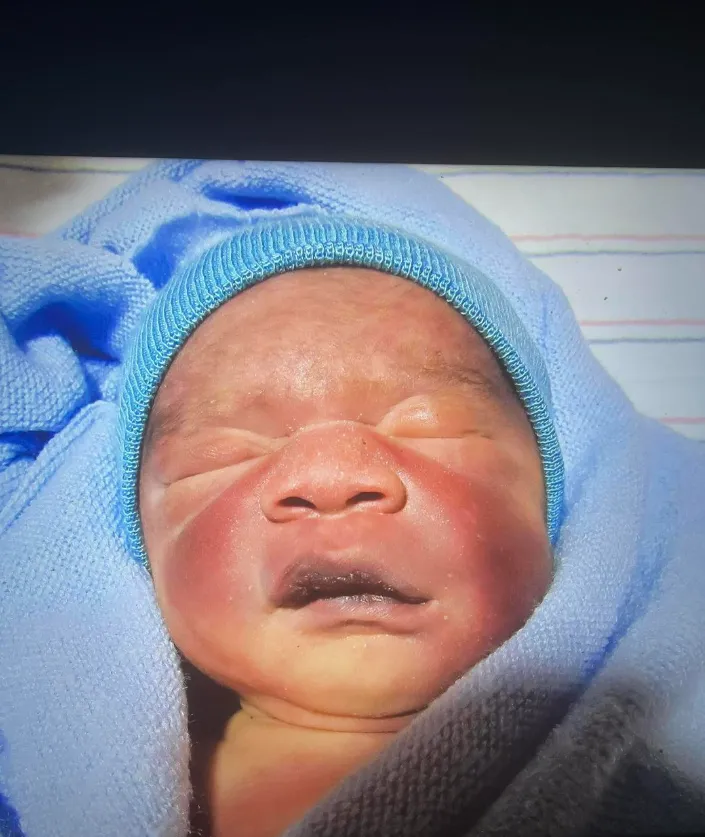
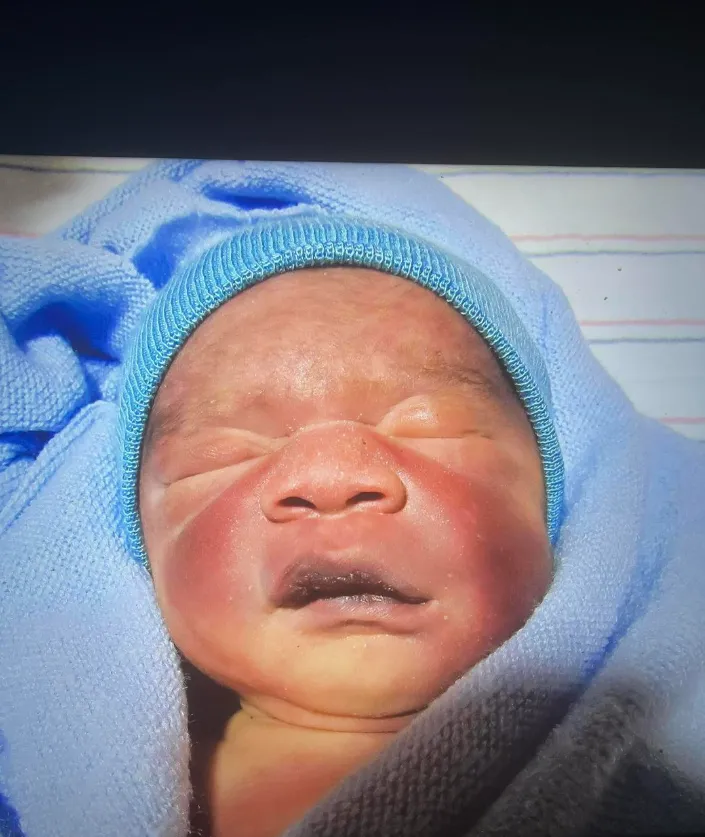
Today we remember and honor a precious little boy whose life, though brief, was deeply loved and will never be forgotten.
His name was Anthony Jr., and his story is one of hope, sudden loss, and the profound love that began long before anything else.
Anthony Jr. was born sleeping on June 9, 2025, at 33 weeks and 2 days gestation, a moment his family had been preparing for with joy and anticipation.
Just five days earlier — on June 4 — his mother had an ultrasound and all appeared well; she was told that everything in the pregnancy was normal and there were no concerns.

For weeks, she had envisioned holding her son, listening for his first cry, and planning a life full of firsts — first smiles, first steps, and first birthdays.
Her scheduled delivery date was July 26, 2025, a day marked on calendars and in conversations, a day that seemed full of promise and new beginnings.
But on that June afternoon, everything changed in an instant.
Out of nowhere, she began to feel sharp, tense pains and cramps, discomfort unlike anything she had experienced before.
She went to her care team expecting reassurance or perhaps a routine check, unaware that her world was about to be shattered.
In that moment, she was told the devastation no parent ever wants to hear — his heartbeat had stopped.
The medical diagnosis revealed not one, but multiple serious complications occurring at once:
• Placental abruption — where the placenta separates prematurely from the uterus, cutting off the flow of oxygen and nutrients that a baby needs to survive.
• Uterine rupture — a rare and severe event where the wall of the uterus tears, threatening both mother and baby.
• And a knot in his umbilical cord, an unexpected complication that can restrict or block the vital flow of blood, oxygen, and nutrients between baby and placenta.
Each of these alone is serious — together they created a perfect storm that no parent imagines and no family is prepared for.
The silence that replaced what should have been a cry of life was overwhelming.
Anthony Jr. had been expected to arrive three more weeks later, safe and healthy, with all the signs of life pointing toward a positive outcome.
Instead, his mother’s hope turned into heartbreak, and the room that should have been filled with joy became still.
While the medical details explain what happened, they cannot capture the depth of loss felt by his family.
There are no statistics that comfort a mother whose arms remain empty.
There are no words that can fill the space where a son should have been held.

The loss of a baby at this stage — after so many weeks of growth, movement, and connection — leaves a unique kind of ache.
Parents often speak of those final weeks — the moments when they feel every flutter, every kick, and whisper their imagined futures to their child.
They prepare the nursery, fold tiny clothes, and imagine a lifetime of memories that never come.
For Anthony Jr.’s family, every one of those dreams now lives in memory.
They remember the ultrasound images, the sound of his mother’s voice when she first called him “our son,” and the joy that filled their hearts in anticipation of his birth.
They also remember the moment everything shifted — when sharp pains replaced quiet calm, when hope was replaced by shock, and when the things they had planned were suddenly out of reach.
In stories like Anthony Jr.’s, the medicine and the emotions intersect in a way that is impossible to separate.

Placental abruption itself is a rare but serious complication that affects a small percentage of pregnancies, often occurring suddenly and unpredictably, and can lead to stillbirth because the placenta can no longer provide the oxygen and nutrients a baby needs.
Uterine rupture is equally uncommon and, when it occurs, can be life‑threatening for both mother and baby.
Umbilical cord complications such as knots or entanglements are another known cause of stillbirth and adverse outcomes because they can disrupt the critical flow of blood and oxygen.
But understanding the science behind these events does nothing to soften the emotional reality faced by families left behind.
These are not abstract terms — they are lived experiences, moments of irreversible loss that reshape a family’s world forever.
Anthony Jr.’s mother spoke from the heart when she described her experience — a healthy pregnancy, a routine ultrasound with no warning signs, and then a sudden cascade of events she could never have anticipated.
“His heartbeat stopped,” she said simply, her voice carrying the weight of everything that followed.
“I had a placental abruption and uterine rupture, and he also had a knot in his umbilical cord.
He was scheduled to be delivered at 37 weeks.
His due date was July 26, 2025.”
Her words reflect both the shock of the moment and the depth of a mother’s love — a love that holds on even when there is nothing left to hold.
Anthony Jr.’s life may have lasted only moments outside the womb, but the love for him began long before and continues long after.
His family now carries a memory that is both fragile and profound.
They speak his name aloud in quiet rooms, share stories of what might have been, and feel his absence in every imagined future.
Yet in that absence, there is also presence — the presence of love that will not fade with time.

They remember him not as a number or a medical case, but as a son, a child deeply loved, and a life that mattered.
His story reminds us that every baby — no matter how brief their time with us — leaves a mark that lasts forever.
Anthony Jr. will always be remembered. 💙🕊️
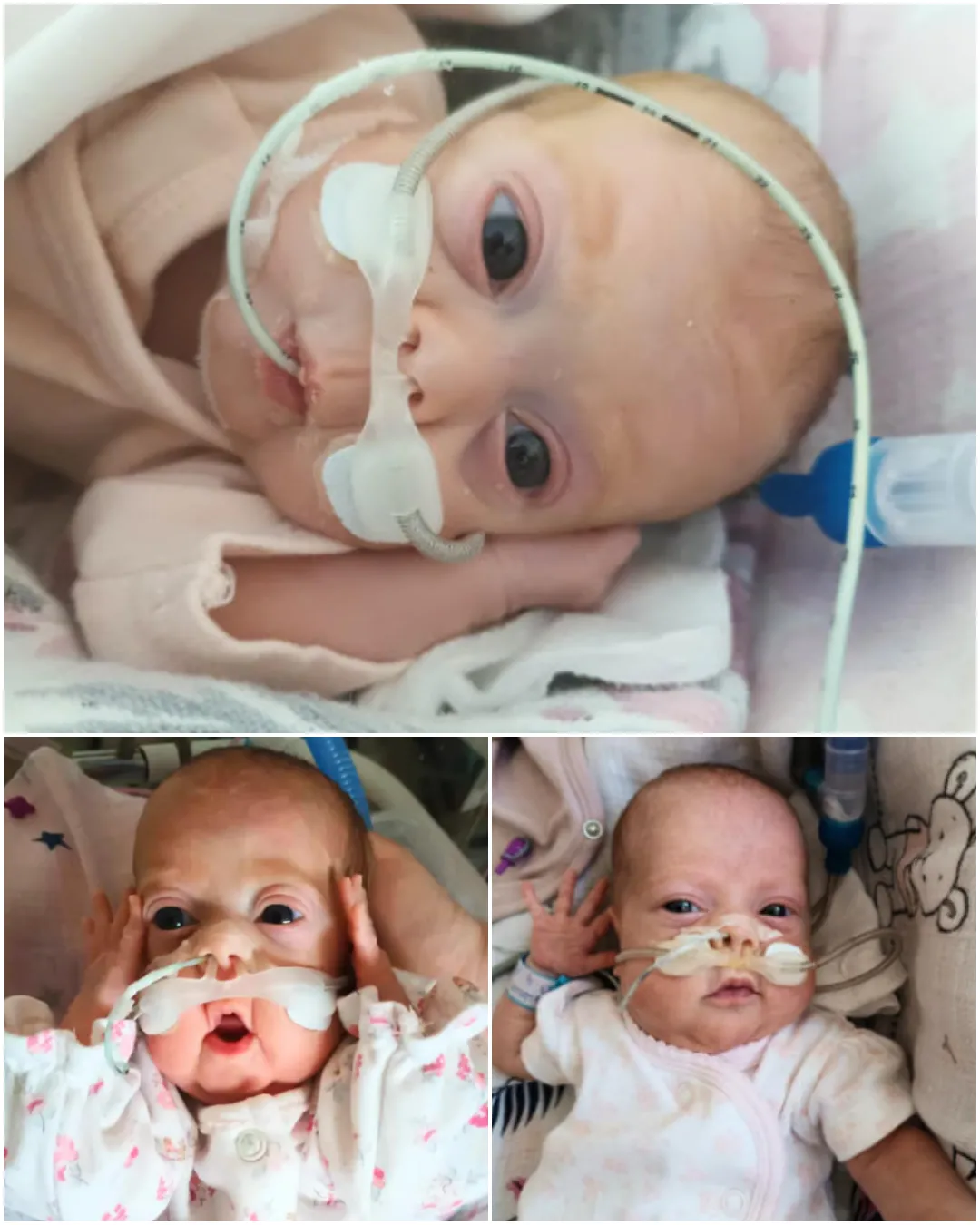
A Miracle at 24 Weeks: Baby Wiktoria’s Fight for Life and the Struggles Ahead. 4826